
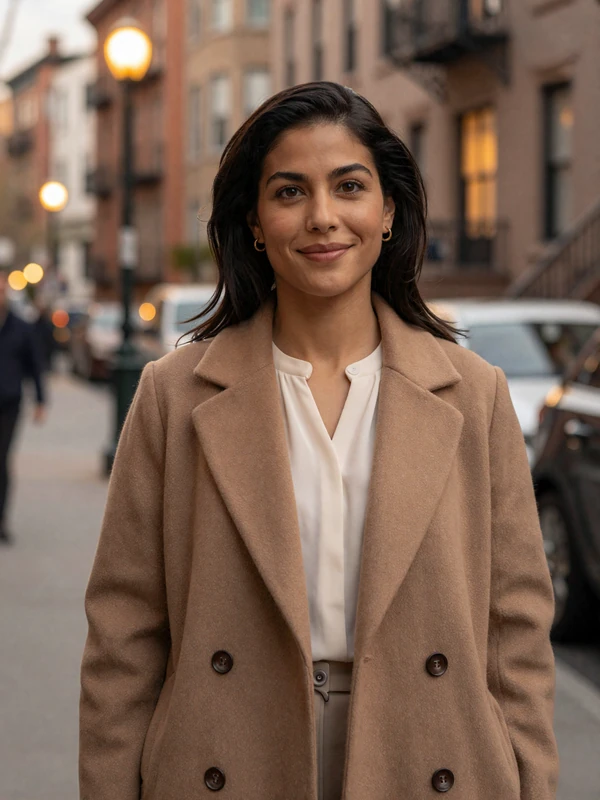
 Verified Doctor
Online now
Verified Doctor
Online now
Dr. Sienna Park, 37
Medical Oncology
New York, NY
A considered introduction service for men who recognise that the woman who sits with patients through their hardest hours brings, to a relationship, an unusual measure of depth, gratitude, and emotional presence - and deserves a partner who meets her there.
NPI verified · By application only · Discreet by design
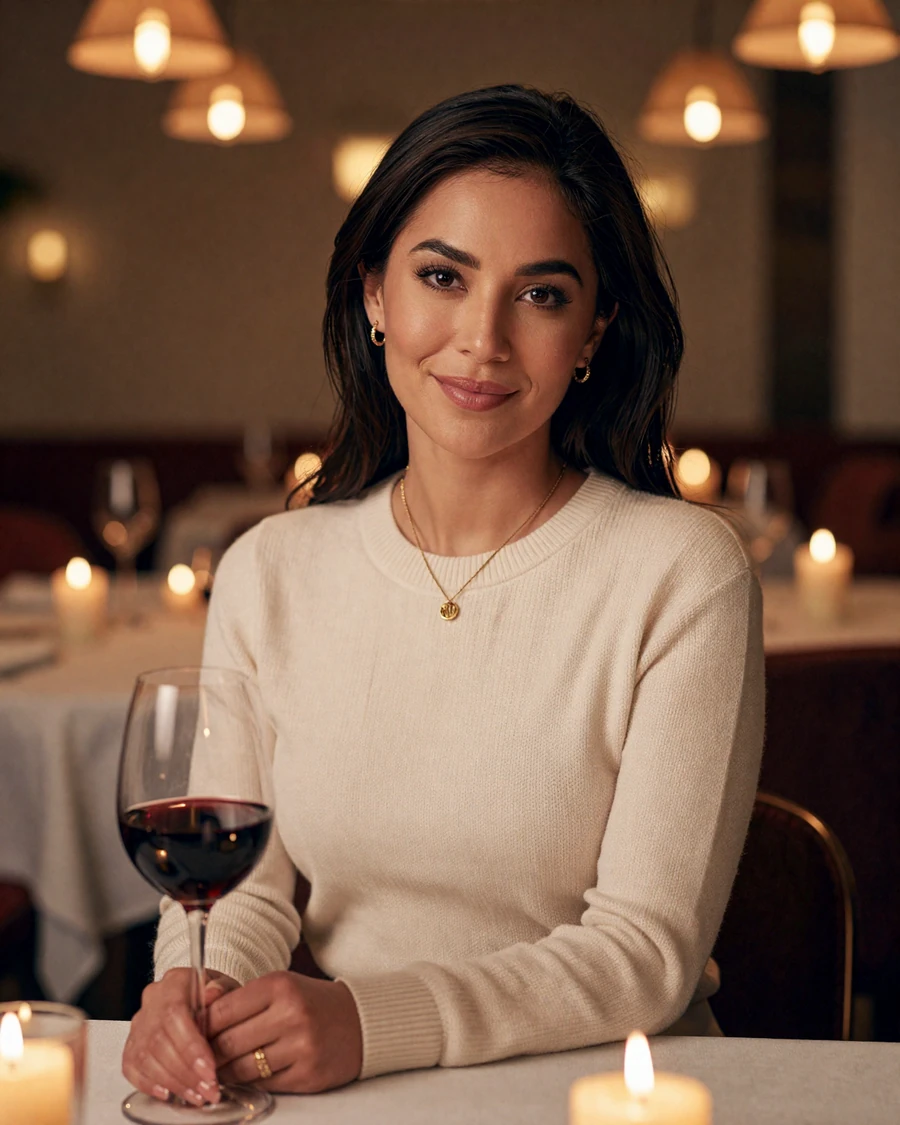
Dating an oncologist asks one quiet thing of you: that you take the present moment seriously. She has spent the past decade in rooms where time is treated as the only currency that matters. Diagnoses are delivered, treatment plans drafted, hands held; appointments end and then the day continues. She has watched more brave people than most of us will meet in a lifetime, and she has been shaped by it. What she brings home is not heaviness - it is a refusal to waste an evening. A walk after dinner is not a walk after dinner to her. It is the evening itself.
The men who flourish here describe her as the woman who taught them what attention actually feels like. She listens the way she examines: completely, without performance, without checking the time. She is rarely interested in spectacle, almost never impressed by volume, and reliably moved by the small, well-chosen gesture - the question asked twice because the first answer was not the real one, the morning text that arrives before her first patient. Our twenty-four-factor compatibility model weights this register of presence heavily for exactly this reason.
“She does not measure a relationship in months. She measures it in evenings that were fully present, and she keeps an honest count.”
- LovePsychology editorial
It is worth saying plainly: oncology is among the most emotionally demanding specialties in medicine. A medical oncologist will, in a single afternoon, deliver a curative remission to one family and a months-of-life prognosis to another, and she is expected to do both with composure. The clinical literature on physician burnout has been consistent for two decades - oncologists carry one of the heaviest emotional loads in the profession, and the work follows them past the parking garage. After twelve hours of life-and-death conversations, there is little appetite for small talk. The pivot from physician to partner is real, and it deserves to be respected, not rushed.
What this asks of you is simple, though not always easy. Meet her where she actually is when she walks in the door. If she is quiet for the first half-hour, the quiet is not about you. Pour her a glass of water before you ask about her day. Let her change. Let her sit. The conversation will come - and when it does, it will be more honest than most.
Her week, in scheduling terms, is more structured than the surgeon’s and less acute than the emergency physician’s. Medical oncologists typically run clinic four days, hold a half-day for tumour board and multidisciplinary review, and round on inpatients in defined blocks. The cadence is exhausting in a different way than surgery - sustained rather than spiked. The compensating gift is that her evenings, weekends, and holidays are largely her own. When she protects a Sunday, she can actually protect it.
If you would like to understand how this fits within the broader profession, our doctors dating directory places oncology alongside its adjacent specialties so that you can choose with clarity rather than guess. For an honest account of the lifestyle calculus behind serious physician dating, see our editorial on the standards high-achieving medical professionals bring to relationships.
The bottom line: she does not need a partner who can fix the weight of her day. She needs a partner who is unafraid of it - who can sit with her in the first quiet half-hour without filling it, and who knows that the conversation that follows is worth waiting for.
Three qualities define the oncologist as a partner. None of them are performative. All of them are the natural residue of the work she has chosen.
Love and compassion travel together but speak in different registers. Phrases such as “I love you” and “thank you” are necessary, but they are not what a partner needs when he is tired, frustrated, or quietly grieving. In those moments she practises empathy as a craft - placing herself in your position, listening without verdict, offering understanding rather than the quick solution. It is the same instinct she brings to a difficult clinic room, and it is the most underrated quality in a long relationship.
She has held real conversations about real things, often before noon. The result is a woman who does not perform depth - she simply lives there. Small talk is fine for thirty minutes; after that she would rather know what you are actually thinking. The men who succeed here come to the table with a question they are willing to answer themselves.
An oncologist learns early that an ordinary evening is not ordinary. A walk, a meal, a long Sunday - these are the things her patients tell her they wish they had paid more attention to. She has been listening. She will pay attention to yours, and she will ask you, gently, to pay attention to hers.
A short, honest field guide drawn from members who have built lasting relationships with women in oncology. None of it is grand. All of it is doable.
The texts that land are not the long ones. They are the timed ones. A note that reads “tumour board today - I’ll be thinking of you at ten” outperforms a paragraph at midnight. A handwritten line slipped into the pocket of her white coat will be found at the worst moment of her week and rescue it. Specificity is the love language of women who live by the schedule.
Long relationships with physicians are held together by ritual more than romance. A standing Friday dinner that does not move. A Sunday morning walk before the world wakes. A shared series watched one episode at a time. These small certainties become the architecture she returns to after the heaviest weeks. Choose two. Protect them as she protects her call schedule.
After a twelve-hour clinic, the body she returns home in is depleted before it is anything else. The gestures that land are the restorative ones - a hand held while you both read, a slow shoulder rub at the kitchen counter, a warm bath drawn without her asking. Desire follows restoration far more reliably than it precedes it. Members who learn this early describe it as the single most useful insight of their relationship.
When she tells you about a difficult clinic afternoon, she is rarely asking for advice. She is asking to be heard by the one person in her life whose opinion of her is not measured in outcomes. The most useful question you will learn to ask is, “do you want me to listen, or do you want me to think with you?” - and then to deliver, exactly, whichever she chose.
A small selection from the active oncologist directory. Each Verified Doctor badge represents a cross-referenced National Provider Identifier - never a self-declaration.
Verified Doctor
Online now
Medical Oncology
New York, NY
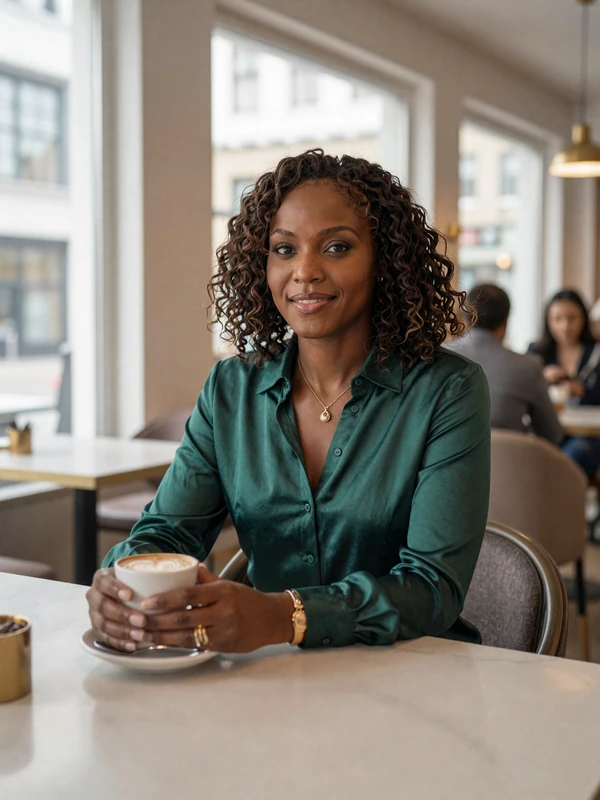 Verified Doctor
Radiation Oncology
Atlanta, GA
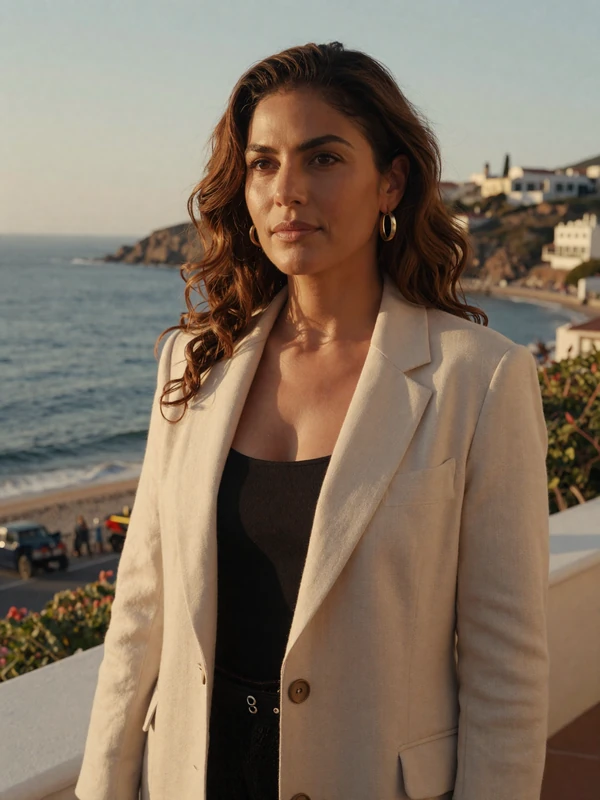 Verified Doctor
Online now
Verified Doctor
Online now
Surgical Oncology
San Diego, CA
The composite oncologist member of LovePsychology is thirty-seven, completed her fellowship at an academic cancer centre, and is now five to twelve years into attending practice. She owns her apartment in or near a major city. She reads more biography than fiction. She runs three mornings a week and walks long distances on Sundays for the simple reason that her work has taught her to. She has, by her own account, become a more attentive woman over the past decade - not despite the difficulty of her specialty, but because of it.
What she is looking for is a man whose seriousness matches her own. Equal income is, as a rule, irrelevant; equal presence is non-negotiable. She is open to introductions across professions - executives, founders, attorneys, fund managers, physicians of every adjacent specialty - provided the man has done his own interior work and can hold a quiet room without filling it.
If that description aligns with the partner you are prepared to be, begin your introduction on the How It Works page.
If the oncologist’s depth and presence resonate, you may find the same emotional register in the adjacent specialties below.
General internists who manage long-term, complex patient relationships with the same continuity of care and intellectual depth.
Explore Profiles AdjacentDiagnostic specialists who often work shoulder to shoulder with oncologists and share a similarly analytical, considered temperament.
Explore Profiles AdjacentPhysicians whose practice is built almost entirely on emotional attunement - the closest relational register to oncology in all of medicine.
Explore Profiles HubReturn to the full directory of twenty-two physician specialties and refine your search by lifestyle, schedule, and values.
Explore Profiles